The problem
Nine people, one set, and a radio each
Think about the last day that ran long. Odds are it wasn’t the camera. It was the
gaffer waiting to be told the shot had changed, the first AD shouting a reset across a
car park, and two people keying up at once so neither message landed.
A two‑way radio is a one‑lane bridge. One person talks, everybody else
listens, and you have to hold a button down to take your turn. That works well when the
traffic is occasional and one voice at a time is all you need. It gets in the way on a crew
that talks the way people actually talk — over the top of each other, in half
sentences, while their hands are busy.
The moment a crew stops having to take turns, the day gets shorter.
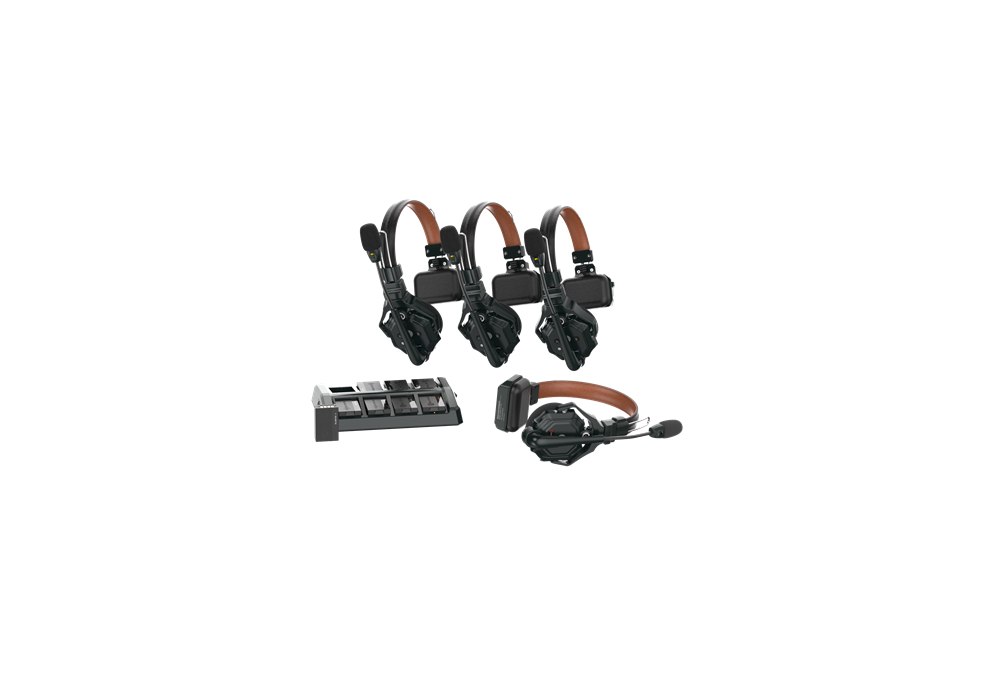
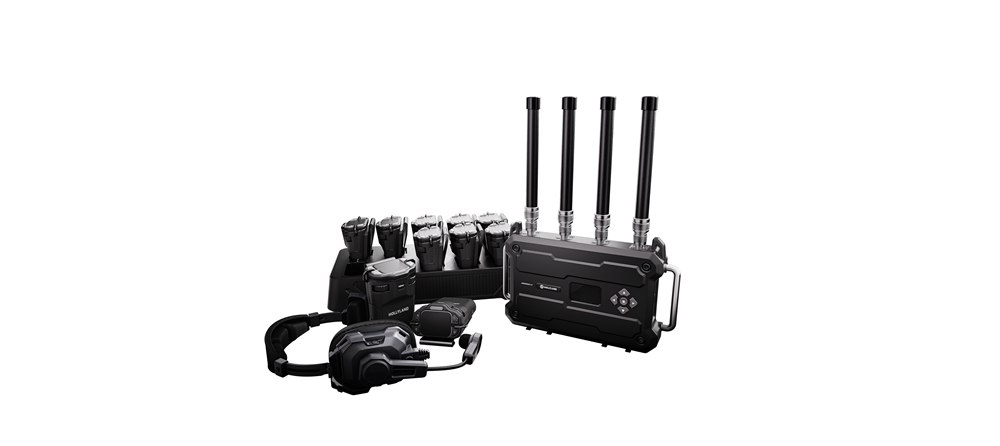
That is the whole idea behind a wireless intercom. Everyone can talk and listen at the same
time, the way a phone call does. No button to hold down, and no waiting for the channel to
clear.