null

Solutions · Cameras

A camera is a system, not just a body.

Stepping up to a proper cinema camera is less about the body than everything around it — the sensor format that shapes the look, the glass, and the rig that makes it usable on a real day’s work. Here’s how the pieces fit, and what to sort out in what order.

The problem

The body is just the part you can see

Almost everyone shops for a camera the same way: by the body — the badge, the megapixels, the reviews. So it gets the attention and most of the budget. The harder decisions are everything around it: the lens, the sound, the media, the power and the support that decide how useful that body actually is on the day. The first real shoot is usually where you find out which decisions mattered.

A proper camera is really four or five decisions wearing one name. The sensor format sets how the image behaves. The lens can change the look more than another step up in camera body. And a camera you can’t rig, power, record to or monitor across a full day isn’t a camera you can work with — no matter how good the body is.

The body gets the attention. The system does the work.

So this page starts where the decision actually starts: the format that shapes the look, then the kind of shooting a camera has to suit, then the rig that turns a body into something you can point at a paying job. Sort those out and the shortlist of bodies that fit gets a lot shorter.

Format · the look under the hood

More than just crop factor

Everyone repeats “crop factor”; far fewer can say what it actually does. The useful question isn’t what one lens does on two sensors — it’s what it takes to get the same shot on both. Match the framing and the smaller sensor needs a wider lens, and that’s where depth of field, lens choice and low-light behaviour start to part ways. This is the part that matters when you’re choosing.

Full frame

Shallower depth of field

The bigger sensor throws the background further out of focus at the same f-stop — the look people call “cinematic”, with often easier low light and easier wide shots along for the ride.

Super 35 · APS-C

More depth of field

The smaller sensor holds more of the scene in focus at the same f-stop — more forgiving to keep sharp, a tighter field of view from a given lens, and the glass itself often runs smaller and lighter.

Same subject, same framing, same f-stop. To hold that framing the full-frame panel uses a longer lens than the Super 35 one — and that is what deepens the background blur.

Same framing

To frame the shot identically, the smaller sensor wants a wider lens — roughly 50mm on full frame ≈ 33mm on Super 35. That ratio is the “1.5× crop factor” everyone quotes.

To match the look

At the same f-stop the full frame stays shallower. To get the same background blur on Super 35 you open up about a stop — and once you do, the low-light gap largely closes too. Depth of field and low light are two sides of one coin, not two separate wins.

Why choose full frame

  • Shallower depth of field at the same aperture
  • More low-light headroom to spend
  • Easier to go genuinely wide

Why choose Super 35 / APS-C

  • More forgiving focus — more of the shot stays sharp
  • Longer effective reach from the same lens
  • Smaller, lighter, often cheaper glass

Neither is “better” — it’s a trade you make on purpose. Most cinema cameras you’ll look at are one or the other, so knowing which behaviour you want narrows the field before you’ve read a single spec sheet.

Which shooter are you?

Start with what you shoot, not the spec sheet

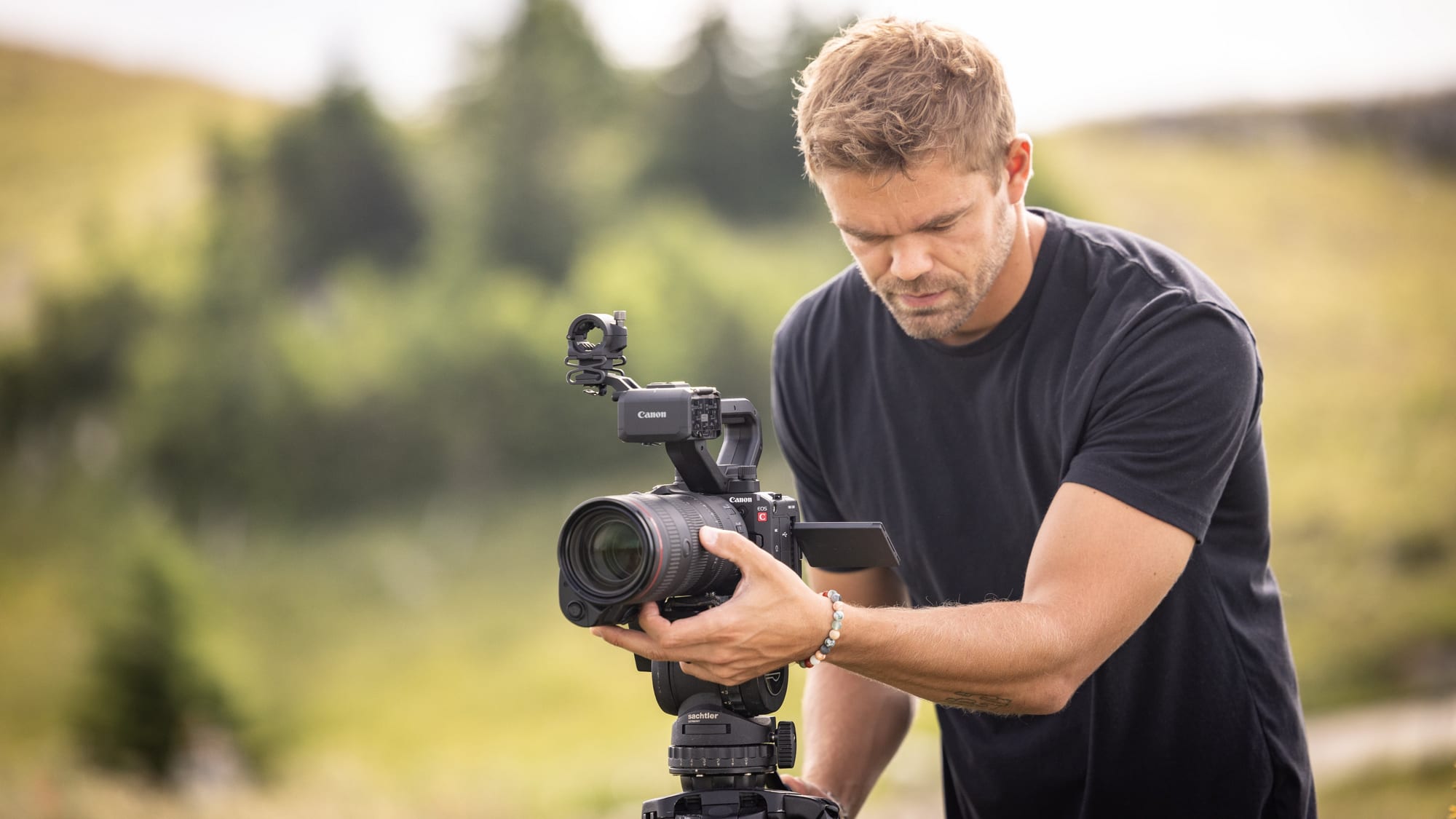
A solo operator with a compact Canon cinema camera on a tripod, shooting on location in natural light.

Events · corporate · weddings · doc

Solo & fast-moving

One operator, unpredictable light, no second takes. You want a body that nails focus on its own, runs all day, and doesn’t fight you when the schedule does.

  • Format S35 or full frame
  • Body (e.g.) Sony FX30 / Canon C80
  • Lenses one do-it-all zoom
  • Media SD / CFexpress
  • Support shoulder or monopod
Compare these
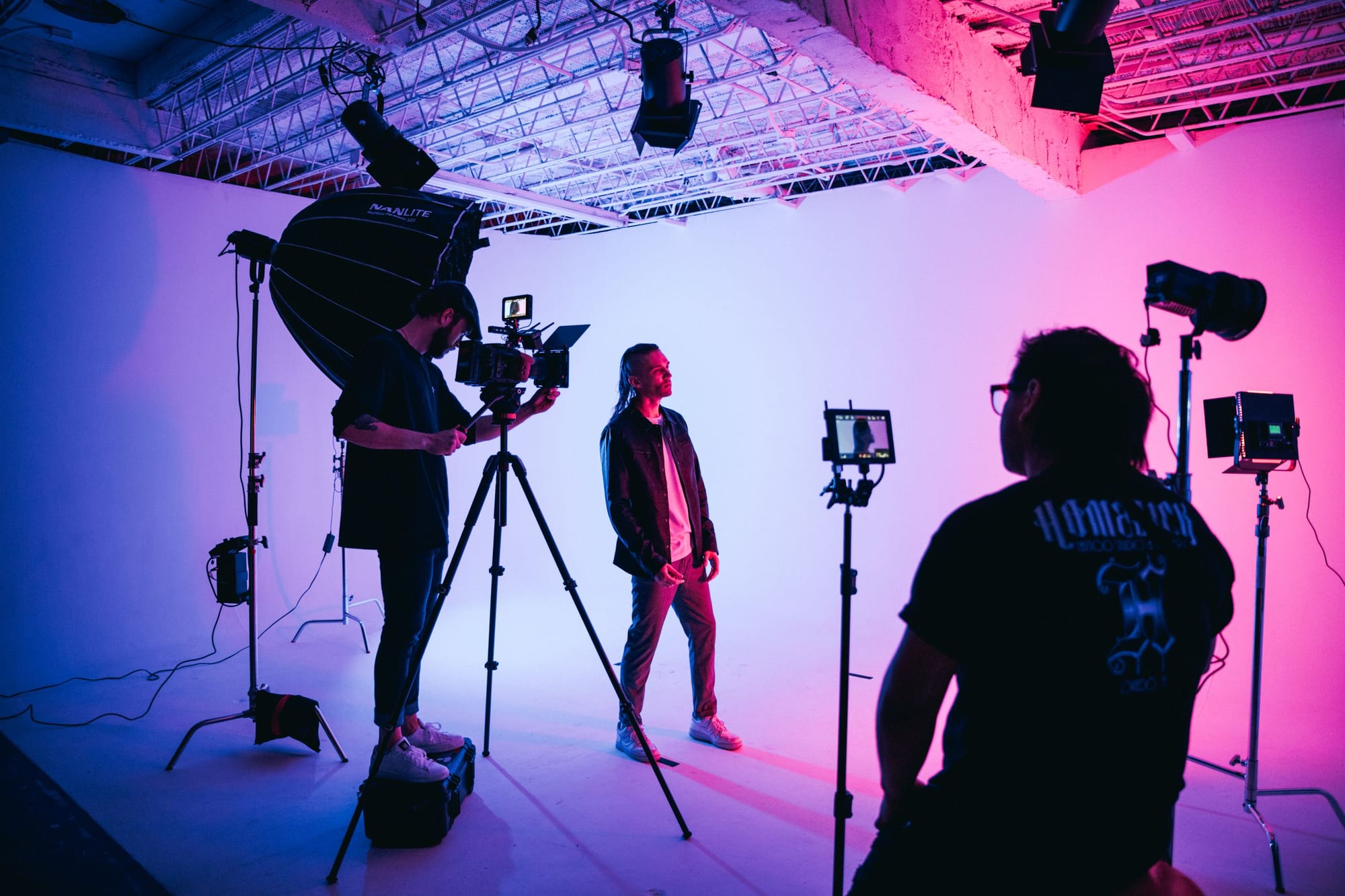
A studio shoot: an operator with a monitor-rigged camera on a tripod, a subject on a lit cyc, with crew and lights around them.

Short film · music video · branded

Controlled production

Controlled shoots where the image is the point. Dynamic range, a codec you can grade hard, and a look you can shape — usually with crew and a bit of time on your side.

  • Format S35 or full frame
  • Body (e.g.) Canon C400 / Sony FX6
  • Lenses a set of primes
  • Media CFexpress / SSD
  • Support tripod, matte box, FF
Compare these
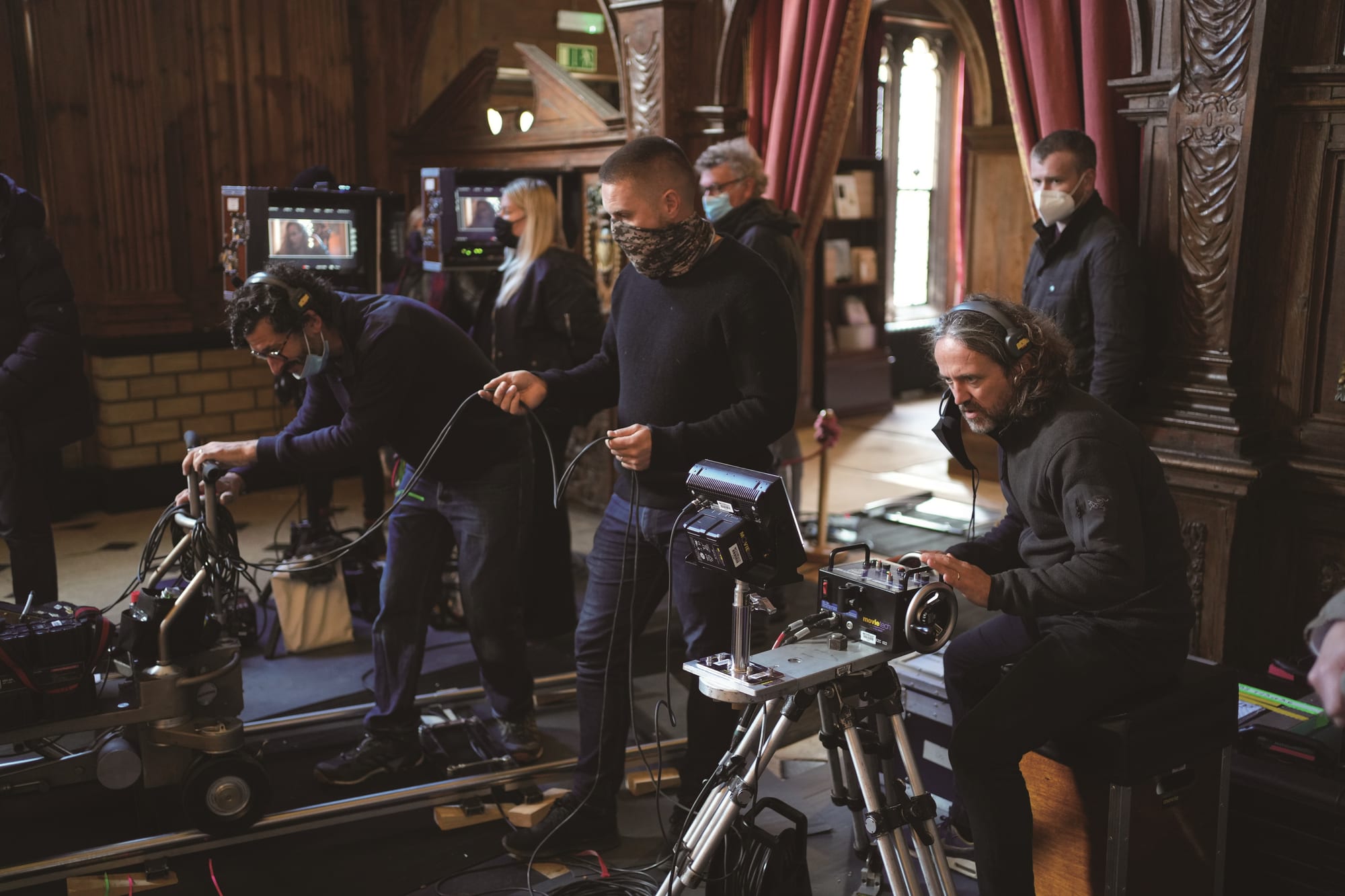
A film crew around a built-out cinema camera on a dolly and remote head, on a controlled set.

Features · commercials · crewed shoots

Crewed cinema

Large-format or flagship cinema bodies, a set of cine primes, and a fully built rig, usually crewed and often hired in per production. Built for full control over the image and repeatable, planned camera work.

  • Format large format or S35 cine
  • Body (e.g.) Sony Venice / BM URSA Cine
  • Lenses cine primes, matched set
  • Media high-capacity cine media
  • Support full cine rig, FIZ, matte box
Talk it through

The system around the body

What turns a body into a working camera

01 · The look

Lenses & mount

After the sensor, glass is the biggest look decision — often bigger than the body. Native mount or adapting; one flexible zoom or a set of primes; and how fast (how low an f-number) you actually need for the light you shoot in.

Consider Native-mount zoom · a set of primes · a speed booster if you’re adapting

02 · Holding it up

Support & rigging

A bare body is hard to actually shoot with. A cage, baseplate and rods turn it into something you can balance, hold and build on — and handheld, tripod and gimbal each ask for different support.

Consider Cage & baseplate · 15mm rods · top handle · tripod or gimbal

03 · Keeps rolling

Media & power

The codec decides the media — higher-bitrate recording modes may require CFexpress or approved high-speed media — and a real day eats more cards and batteries than you’d guess. A camera you can’t keep fed and powered isn’t usable all day.

Consider The right card spec · spare cards · V-mount or NP-F power · a fast reader

04 · Eyes on it

Monitoring

The built-in screen won’t tell you if the shot is truly sharp or the highlights are already gone. An on-camera monitor with focus peaking, false colour and a waveform is how you trust what you’re actually recording.

Consider A 5″ on-camera monitor · focus & exposure tools · a recorder-monitor for a safety copy

05 · Sound

Audio on camera

Even a “camera” decision includes sound. XLR inputs, a shotgun or a wireless kit — and, depending on the job, the camera track may be the master or a guide to separately recorded sound.

Consider XLR input or adapter · a shotgun mic · a wireless lav kit

06 · Control the light

Filtration

To shoot wide open in daylight you have to cut light: built-in ND on some bodies, a variable ND or a matte box on others. It’s the difference between the shallow look you wanted and an aperture stopped right down.

Consider Built-in ND vs variable ND · a matte box · a set of ND filters

Rigging is freedom

One body becomes three different cameras

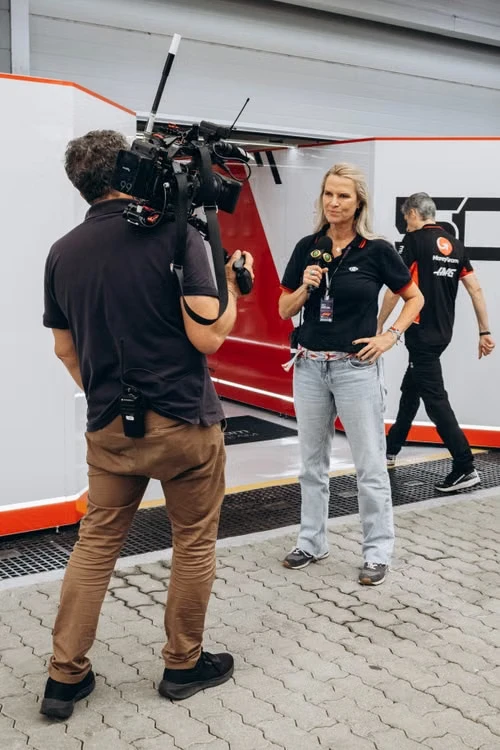
An operator with a shouldered, wirelessly-rigged camera filming an interview subject at eye height in a paddock.

On the shoulder

Eye-height interview

A shoulder build puts the camera at a natural working height and spreads the weight across the operator. Add a monitor, audio and power and it’s a responsive setup for interviews, doc and location work — where you follow a person rather than a plan.

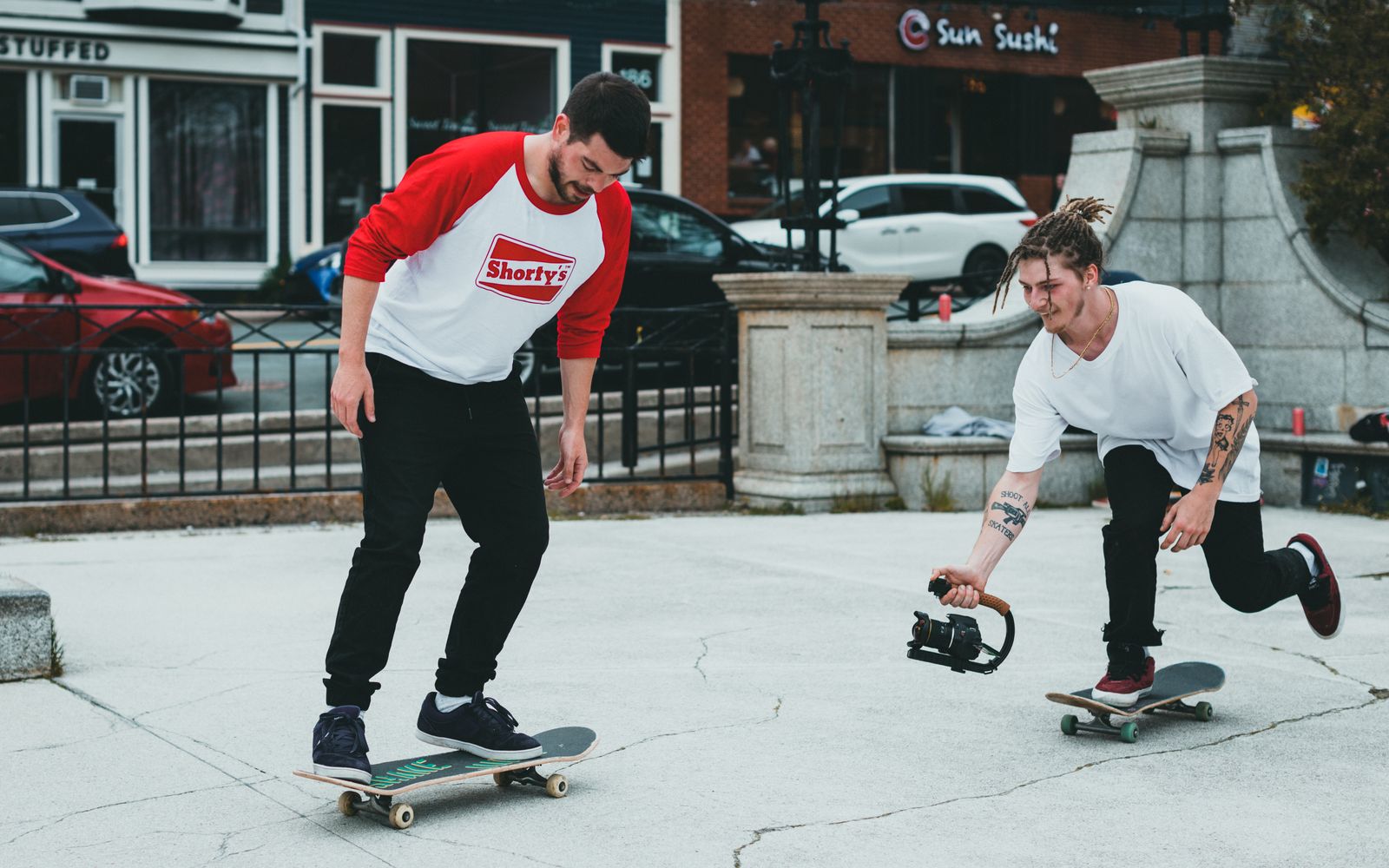
An operator carrying a camera on a low top-handle grip, chasing a skater at deck height.

On a low grip

Action from the deck

Dropped onto a top handle you can carry low and run with, the same body chases the action at board height — the fast, in-it angle you simply can’t get from your own eyeline.

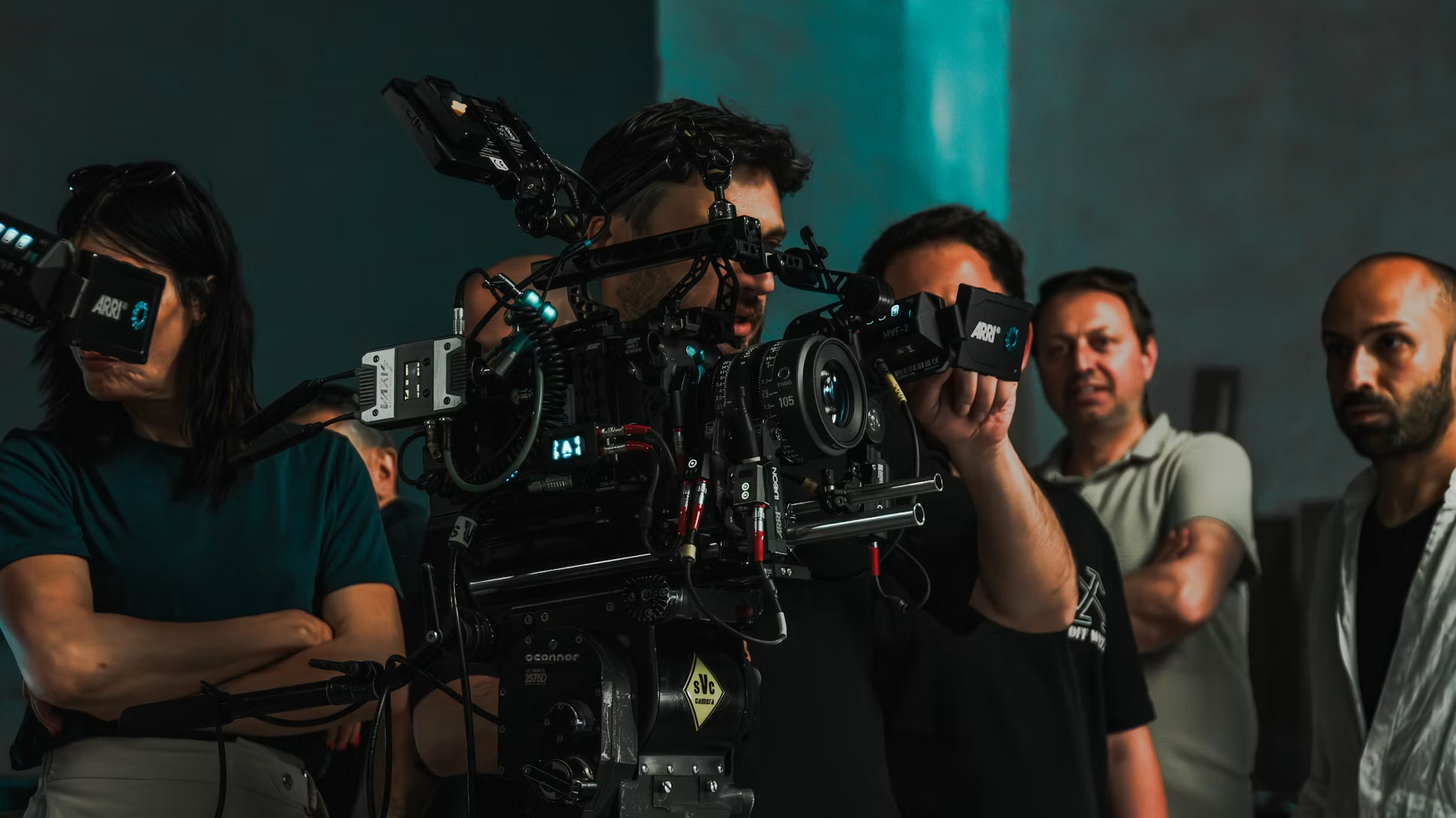
A film crew gathered around a fully built-out cinema camera — matte box, follow focus, cine lens — in a darkened studio.

On a full cine build

The controlled look

Built out on a head or dolly with a matte box, follow focus and a crew around it, the same body supports repeatable, controlled camera moves — the setup for larger productions, usually crewed and often hired in per shoot.

Side by side

The three shooters, compared

Area Solo & fast-moving Controlled production Crewed cinema
Typical formatS35 or full frameS35 or full frameLarge format or S35 cine
Bodies (e.g.)Sony FX30 · Canon C80Canon C400 · Sony FX6Sony Venice · BM URSA Cine
Autofocus mattersA lotSometimesOften pulled manually
LensesOne do-it-all zoomA set of primesCine primes, matched set
MediaSD / CFexpressCFexpress / SSDHigh-capacity cine media
RiggingLight — shoulder / monopodTripod, matte box, follow focusFull cine rig, FIZ, matte box
ND approachBuilt-in or variable NDBuilt-in ND highly usefulInternal and/or matte-box filtration
Best forOne-op jobs, fast turnaroundsThe image being the pointControlled, repeatable shots

Most people land between two columns rather than squarely in one, and that’s normal. Which way to lean depends on the work — sometimes it’s more glass, sometimes more body. Tell us which two you’re between and we’ll tell you which half actually matters.

Plain English

The words on the spec sheet, decoded

Sensor size
The physical chip that captures the image. Bigger sensors gather more light and give shallower depth of field for the same framing; smaller ones are cheaper to build lenses for.
Crop factor
How much smaller a sensor is than full frame. A 1.5× crop makes a lens frame tighter, so you reach for a wider lens to match — it’s a framing shortcut, not a quality mark.
Full frame
A sensor the size of a 35mm film still. Shallow depth of field, strong low-light, and the widest choice of fast glass.
Super 35
The classic motion-picture frame size, close to APS-C. The workhorse of cinema for decades; more depth of field and lighter lenses than full frame.
Dynamic range
How much detail the camera holds from the darkest shadow to the brightest highlight in one shot. More is what lets you rescue a bright window or a dim face in the grade.
Video vs RAW
A conventional video recording — often 10-bit Log — is processed into a smaller, easier-to-edit file. RAW retains more sensor-level information for grading and adjustment later, at the cost of heavier storage and post-production.
Bit depth
How finely the camera records colour and tone. 8-bit banding shows in skies and skin; 10-bit and up grade far more cleanly.
Log / gamma
A flat-looking picture profile that keeps the most detail for grading. It isn’t the final look — it’s the negative you develop later.
ND filter
Sunglasses for the lens. Cuts light so you can shoot wide open in daylight without over-exposing — built into some bodies, added with a matte box on others.
Lens mount
The fitting between body and lens (E, RF, L, PL…). It decides which glass fits natively and what you can adapt — a bigger commitment than the body itself.
Rolling shutter
The sensor reads top-to-bottom, so fast pans or quick movement can lean or wobble. Faster sensors show less of it.

Tell us what you shoot.

What you shoot, where you shoot it, whether you work alone or with a crew, and whether the camera is for your own productions or client work — that points to the right camera far better than any spec sheet. Nothing here is a package you take whole; the fastest way to the right body is a short conversation.